

Cart
0
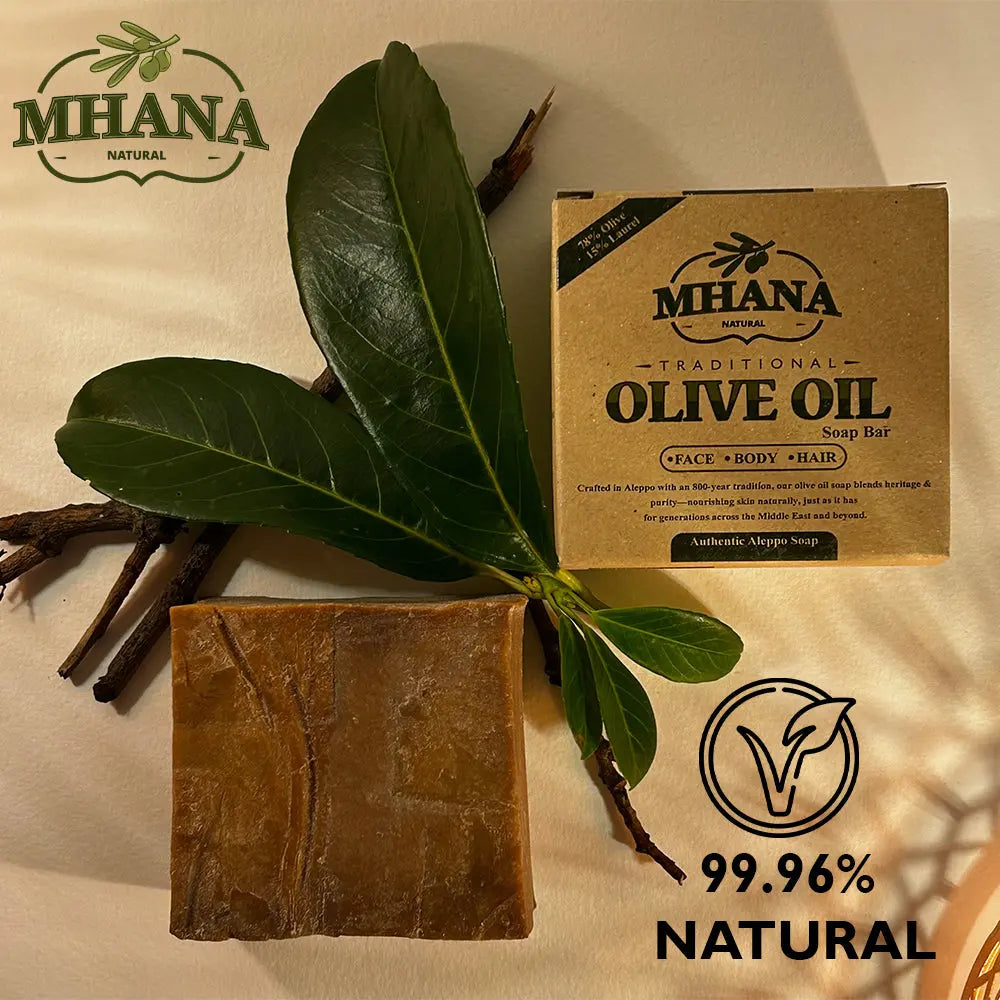
Traditional olive-and-laurel soap has a fascinating history, but ingredient research should not be confused with proof that a finished soap treats or prevents a medical condition.
Olive oil and saponification
Olive oil is rich in oleic acid. When it is saponified with sodium hydroxide, the chemistry changes and soap salts are formed. Research on raw olive oil therefore cannot automatically be transferred to a finished rinse-off soap.
What do we know about laurel?
Laurel comes from Laurus nobilis. Researchers have investigated different laurel extracts and oils, including laboratory studies of antimicrobial activity. These experiments are interesting, but laboratory activity does not establish that a particular finished soap disinfects skin.
Does laurel make soap antibacterial?
Not automatically. A finished cosmetic product is different from a raw plant extract, and product-specific antimicrobial claims require appropriate evidence. MHANA therefore presents laurel as part of the soap's formulation and traditional character rather than as a medical treatment.
What about laurel percentages?
Different olive-and-laurel soaps use different proportions. A higher percentage is not automatically a better or medically superior formulation. It changes the composition and sensory characteristics of the bar.
Why skin type matters
Traditional soap is alkaline. Some people may find it comfortable, while others may experience dryness or irritation. If a cleanser causes persistent irritation, discontinue use and choose a product appropriate for your skin.
The MHANA approach
We prefer evidence-led explanations over exaggerated promises. Explore MHANA No.01 or read how the soap is made.

