

Cart
0
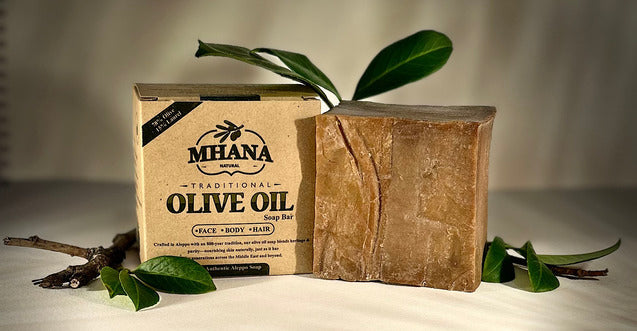
Olive oil soap is a traditional soap made by reacting olive oil with an alkali through saponification. The finished product is a soap, not simply olive oil placed on the skin.
What is olive oil soap?
Olive oil is the main oil used in the formulation. During saponification, the oil reacts with sodium hydroxide to form soap. Water is also used in the manufacturing process. Some formulations combine olive oil with other plant oils, such as laurel oil.
What does olive oil contribute?
Olive oil has a fatty-acid profile that gives olive-oil soaps their characteristic cleansing and lathering behaviour. Traditional olive-oil soaps can produce a creamy rather than highly bubbly lather, and a well-cured bar can become firm and long-lasting.
Olive oil soap and skin
Skin responds differently to soap. Traditional soap is alkaline, while healthy skin has a naturally acidic surface environment. If a new soap leaves your skin persistently dry, tight or irritated, stop using it and choose a cleanser that suits you.
Common uses
Olive-oil soap can be used as a cleansing bar for hands and body. Some people also use traditional soap on the face or hair, but suitability varies because soap is alkaline.
How to choose a bar
Look for a clear ingredient list, a stated weight, clear manufacturer information and realistic product claims. If you are comparing olive and laurel soaps, check the oils and stated percentages rather than relying on words such as “natural” or “pure”.
MHANA No.01
MHANA No.01 is a 200g olive-and-laurel soap made in Turkey using a traditional Syrian/Aleppo-style method. You can view the MHANA No.01 product details or read how the soap is made.
